Why the alphabet is more than memorization
Letters are symbols children carry into every subject. What changes when we treat them as ownership, not recall?
June 2, 2026
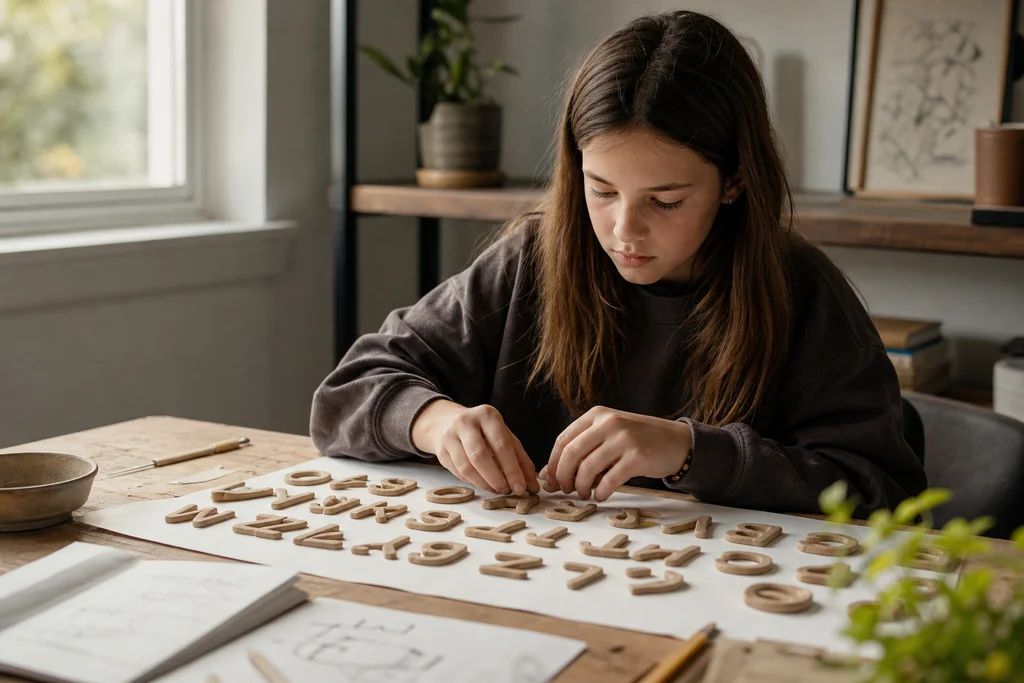
Letters are symbols children carry into every subject. What changes when we treat them as ownership, not recall?
June 2, 2026
Most of us were taught the alphabet as a song and a checklist. Say it, write it, move on. That works for some children. For others, letters remain strangely slippery — not because they cannot remember, but because they were never invited to own the symbols.
Ownership is different from recall. Recall asks a child to repeat what was shown. Ownership asks whether the letter feels familiar in the hand, stable on the page, and connected to meaning. When a child owns a letter, they know how it begins and ends. They can place it on a line without guessing. They can use it as a building block for spelling and reading instead of a fragile shape they hope will come out right.
That distinction matters across every subject. Math uses symbols. Science uses notation. Music uses marks on a staff. Writing is not a separate island — it is where alphabet ownership becomes visible. A child who struggles to form letters consistently may also struggle to spell with confidence, to read fluently, or to express an idea without the page fighting back.
Families often arrive after years of practice: flashcards, apps, tutoring, accommodations. The child may know the alphabet by name and still feel uncertain when writing. The shift is not to do more of the same. It is to ask whether the foundation was ever made automatic — whether letters live in the body and on the page as trusted tools.
When we treat the alphabet as a living foundation, several things become possible. Homework may take less emotional energy because the child is not rebuilding letters from scratch each time. Spelling may become less random because patterns have a place to attach. Reading may feel less like decoding someone else's code and more like meeting familiar symbols in new arrangements.
Instead of asking only whether a child knows their ABCs, it may help to ask: Do these letters belong to my child yet? Do they write them the same way twice? Do they hesitate before they begin? Do they light up when speaking and dim when the pencil appears?
Those observations are not failures. They are information — the kind that can redirect a family toward a clearer starting point before confidence erodes further.
— Diane Devenyi
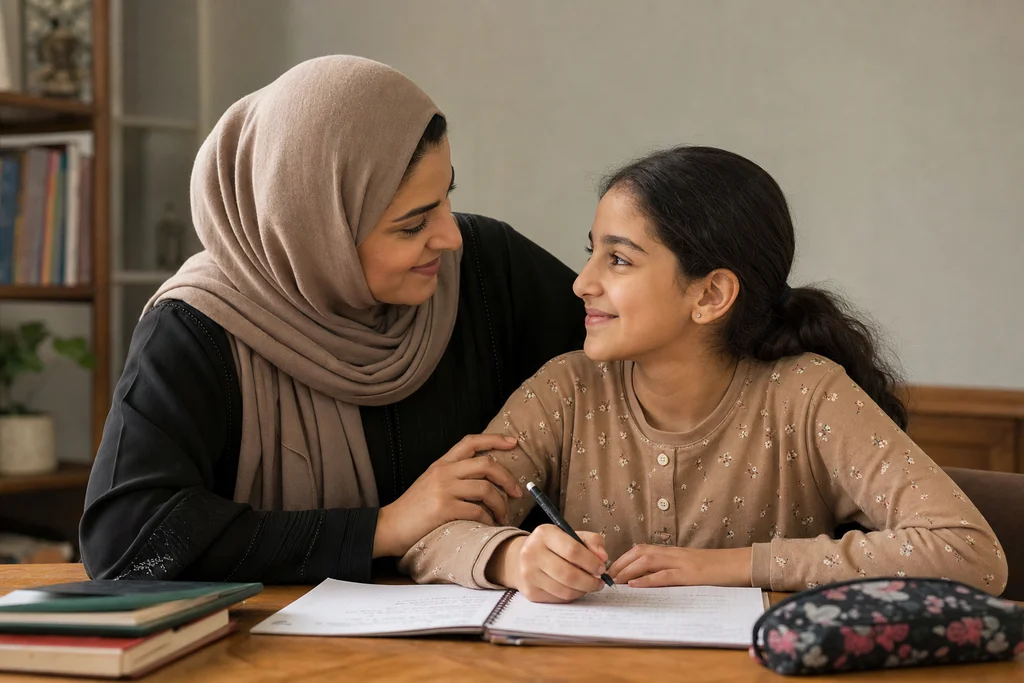
Confidence is not a sticker for good grades. It is part of how children decide whether effort is worth it.

Technology will keep shifting tools. Foundational ownership of symbols and patterns still belongs to the learner.